Why Dental Scaling is Important for Your Teeth
Introduction
Do your gums bleed while brushing?
Are you struggling with bad breath that doesn’t improve even after using mouthwash?
Have you noticed yellow stains near your gum line?
These are common dental problems that many people ignore. Some feel nervous about visiting the dentist, while others believe brushing harder will solve the issue. But in reality, these signs may indicate plaque and tartar buildup — and this is where dental scaling becomes essential.
As a dental professional, I always tell my patients that prevention is easier and less expensive than treatment. Professional teeth cleaning is one of the simplest and most effective ways to protect your smile.
Let’s understand why dental scaling is so important for your teeth and gums.
What is Dental Scaling?
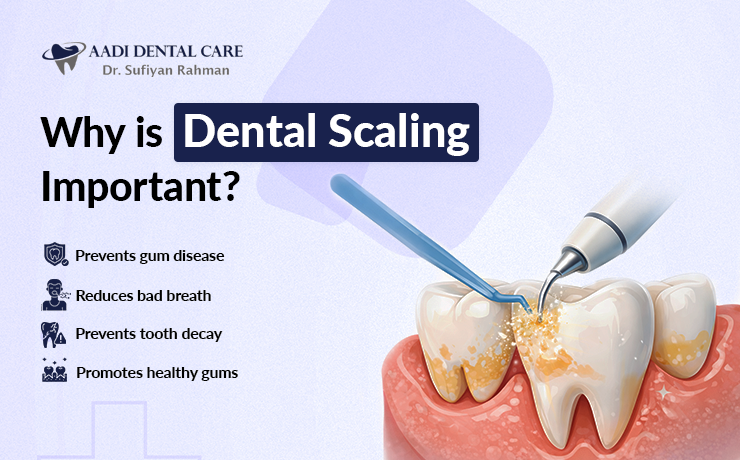
Dental scaling, also known as teeth scaling or professional teeth cleaning, is a preventive dental procedure that helps remove plaque and tartar from the teeth and gum line.
Plaque is a soft, sticky layer of bacteria that forms on teeth after eating. If not removed properly through brushing and flossing, plaque hardens into tartar (calculus). Tartar cannot be removed at home — it requires professional dental instruments.
During dental scaling, your dentist carefully removes plaque and tartar from:
- The surface of the teeth
- Between the teeth
- Below the gum line
If the buildup extends deeper below the gums, a procedure called deep cleaning teeth (scaling and root planing) may be recommended.
This process helps restore healthy gums and maintain proper oral hygiene.
Why is Dental Scaling Important?
Many people believe scaling is only for cosmetic cleaning. However, the benefits of dental scaling go far beyond appearance.
Prevents Gum Disease
Plaque and tartar irritate the gums, leading to inflammation. This early stage of gum disease is called gingivitis. If untreated, it can progress to periodontitis, a serious infection that damages the supporting bone.
Regular scaling helps prevent gum disease before it becomes severe.
Reduces Bleeding Gums
If you notice bleeding gums while brushing, it is often due to inflammation caused by plaque buildup. Removing tartar allows the gums to heal and become healthier.
Prevents Tooth Decay
Bacteria in plaque produce acids that damage tooth enamel. Professional cleaning reduces bacterial buildup and helps prevent tooth decay.
Eliminates Bad Breath
Persistent bad breath is commonly caused by bacteria trapped in plaque and tartar. Scaling removes these bacteria and improves overall mouth freshness.
Prevents Tooth Loss
Advanced gum disease can weaken the bone supporting your teeth. Regular dental scaling protects your teeth from loosening or falling out.
In simple words, dental scaling protects both your teeth and gums from long-term damage.
Signs You May Need Dental Scaling
You may require teeth scaling if you notice:
- Bleeding while brushing
- Swollen or red gums
- Tartar deposits near the gum line
- Persistent bad breath
- Gum sensitivity
- Yellow or brown stains near gums
- Gums pulling away from teeth
Even if you don’t see these symptoms, regular dental check-ups are important because tartar buildup can occur silently.
Teeth Scaling Procedure
Understanding the process helps reduce fear.
Step 1: Dental Examination
Your dentist examines your teeth and gums to assess plaque, tartar, and gum health.
Step 2: Removing Plaque and Tartar
Special dental instruments are used to gently remove plaque and tartar from above and below the gum line. Ultrasonic devices may also be used for efficient cleaning.
If deeper infection is present, deep cleaning teeth may be recommended to clean the root surfaces.
Step 3: Polishing
After scaling, teeth are polished to remove minor stains and smooth the surface, making it harder for plaque to accumulate again.
Is Dental Scaling Painful?
One of the most common concerns patients ask is: Is dental scaling painful?
For most individuals, dental scaling is not painful. You may feel mild vibration or slight sensitivity, especially if there is heavy tartar buildup.
If your gums are inflamed, you might experience mild discomfort. However:
- The procedure is safe
- It is quick
- Local anesthesia can be used if necessary
Any temporary sensitivity usually disappears within a day or two.
Early treatment prevents more serious and painful dental procedures later.
Benefits of Dental Scaling
Here are the major benefits of dental scaling:
- Removes plaque and tartar effectively
- Prevents gum disease
- Reduces bleeding gums
- Helps prevent tooth decay
- Eliminates bad breath
- Improves overall oral hygiene
- Brightens your smile naturally
- Protects against tooth loss
- Supports long-term dental health
Regular professional teeth cleaning is one of the best investments for your smile.
How Often Should You Get Dental Scaling?
Most dental professionals recommend scaling every 6 months.
However, some people may need more frequent cleaning depending on:
- Gum disease history
- Smoking habits
- Poor oral hygiene
- Medical conditions like diabetes
Your dentist will guide you based on your oral health condition.
Regular visits ensure early detection and prevention of serious dental problems.
Common Myths About Dental Scaling
Myth 1: Scaling Weakens Teeth
Scaling does not damage or weaken teeth. It only removes harmful buildup.
Myth 2: Scaling Creates Gaps
Tartar may hide existing gaps. After removal, teeth return to their natural shape.
Myth 3: Scaling is Only for Dirty Teeth
Even people who brush daily can develop tartar. Professional cleaning is necessary for everyone.
Myth 4: It’s a One-Time Treatment
Dental scaling is part of routine dental care and should be done regularly.
Conclusion
Healthy gums are the foundation of healthy teeth. Ignoring symptoms like bleeding gums, bad breath, or tartar buildup can lead to serious dental problems over time.
Dental scaling is a safe, simple, and highly effective procedure that helps maintain proper oral hygiene, remove plaque and tartar, prevent gum disease, and protect your smile.
If you haven’t had a professional teeth cleaning in the last six months, now is the right time to schedule your appointment.
Take care of your smile today — your future self will thank you.